When I started writing the Silver Circle Cat Rescue Mysteries, a cozy series about a cat rescue, I did my research on how real cat rescues work. But the rescue itself was fiction. They say art imitates life. Around here, life read the books and took notes, and now I'm running a cat rescue of my own off my front deck.
We live in a rural area, so a few barn cats and wanderers come with the territory. But over the last couple of years, the situation has exploded. This fall there were kittens everywhere, and I do mean everywhere: three of them moved into the belly pan of our Honda CR-V. Getting them out meant taking the belly pan off. Taking the belly pan off meant ordering a special tool. And the tool meant waiting, because we couldn't exactly drive to the store to pick one up with three kittens riding along underneath. So we were held hostage in our own driveway by three kittens, and the tool took its sweet time getting here.
We called and messaged the local feral cat groups, but nobody got back to us. We don't blame them one bit. They're doing everything they can, and they're overwhelmed. There just aren't enough people doing this work.
So in September 2026 we decided to become two more of them. We found out our county shelter, the Williamson County Regional Animal Shelter, runs a Feral Cat Surgeries program: you trap the cat, they spay or neuter it, vaccinate it, tip its left ear so everyone knows it's been done, and you bring it home to live out its life without adding to the problem. That's TNVR — trap, neuter, vaccinate, return. We watched a lot of YouTube, bought a trap, and started setting it.
Our first cat went in on September 18. The day before, one of the other strays had a litter of kittens. Message received.
We swore we wouldn't name any of them. You can see how that went.
Done: Fixed and Back Home
Each of these cats has been spayed or neutered, vaccinated, and ear-tipped. They still come for breakfast and dinner. Every one of the four girls is one less litter in the neighborhood.
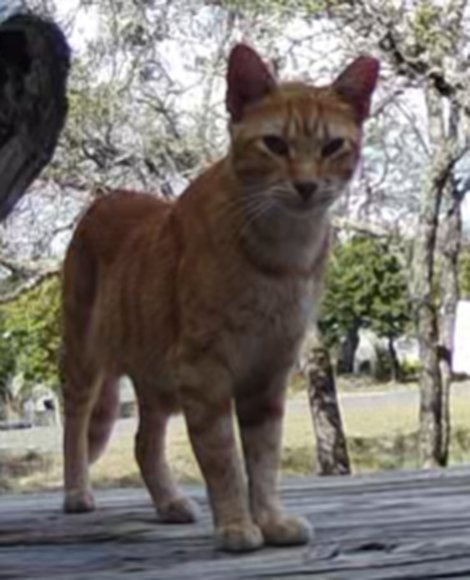
Clementine
The one who started it all: the first cat we ever caught. After her surgery she headbutted me in the recovery bathroom. These days she keeps her distance, and that's fine by us.
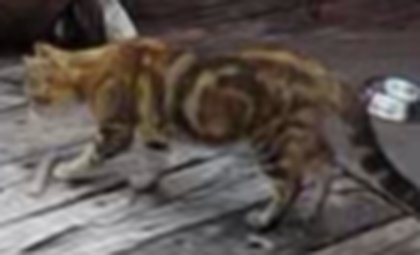
Ampersand
Named for the swirl on her side, which looks just like an ampersand. Breakfast every day without fail. She once ran a raccoon off the deck.
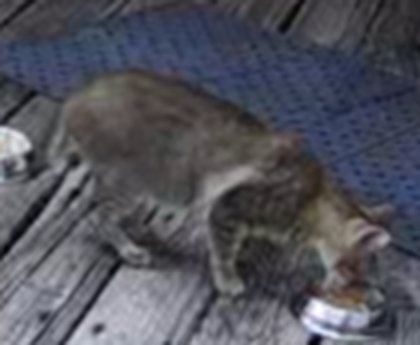
Stubby
She came to us with a badly hurt tail. The shelter spayed her and took care of it, and now she has a tiny nub. We tried to rename her Novella. Stubby stuck.
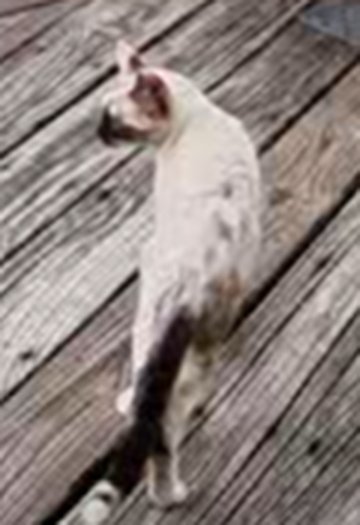
Patches
Siamese-looking, with a face that's half light and half dark. Shows up every day and is doing just fine.
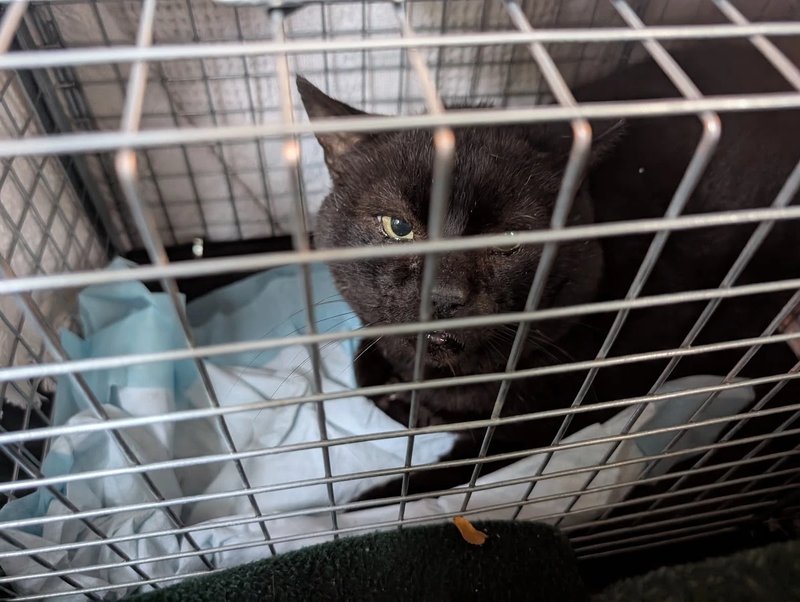
Tank
A big all-black tomcat who does his eating at night. The neighbor named him, and it fits.
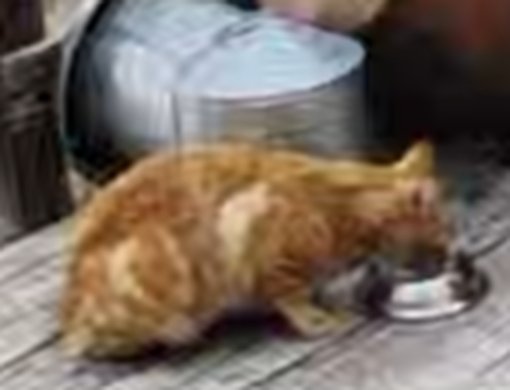
One-Eyed Willie
A broad-headed orange tom who came in with a hurt eye. Our own vet gave him a long-lasting antibiotic before he went home. We're keeping an eye out for him.
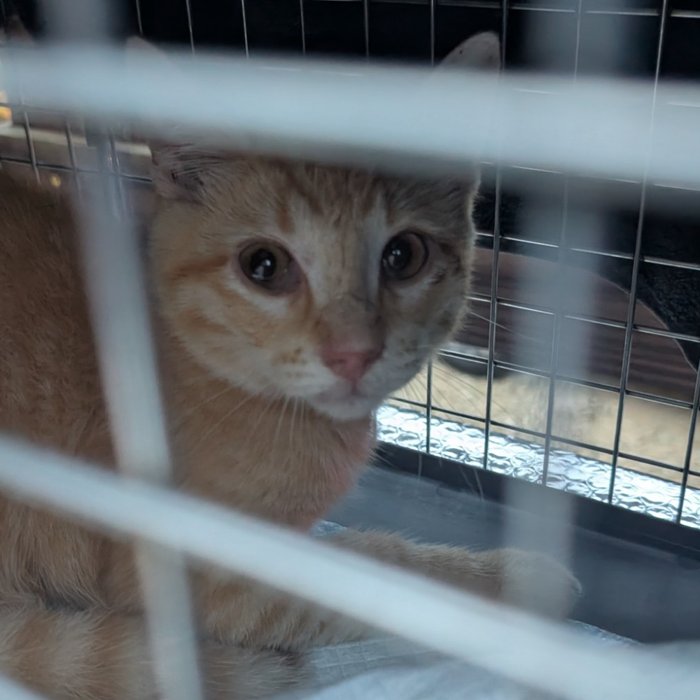
The Young Orange
No name yet. White chin, white muzzle. Once he was fixed, he decided he was never coming back to the scene of his kidnapping, not even for food. We've spotted him a couple of times, so we know he's okay. He's just holding a grudge.
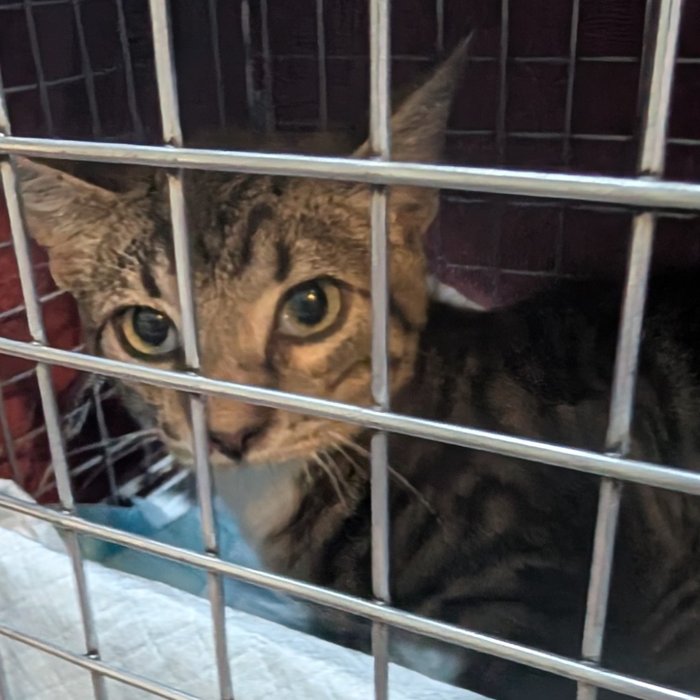
Mack, a.k.a. Squirt
Squirt is the name you'll hear in a lot of the videos. He was supposed to go up for adoption, but he was too spicy to cuddle. So he got fixed and came home, and now he lives here. Probably Clementine's son.
Still to Catch
No ear tip yet. These are the ones we're working on.
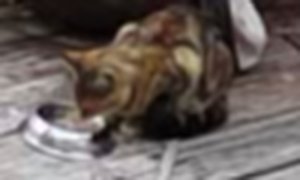
Little Mother
The mom. She had a litter in September, and sadly we don't think the kittens made it. She dodged the drop trap in November and is warier than ever, but she's next on our list. Wish us luck.
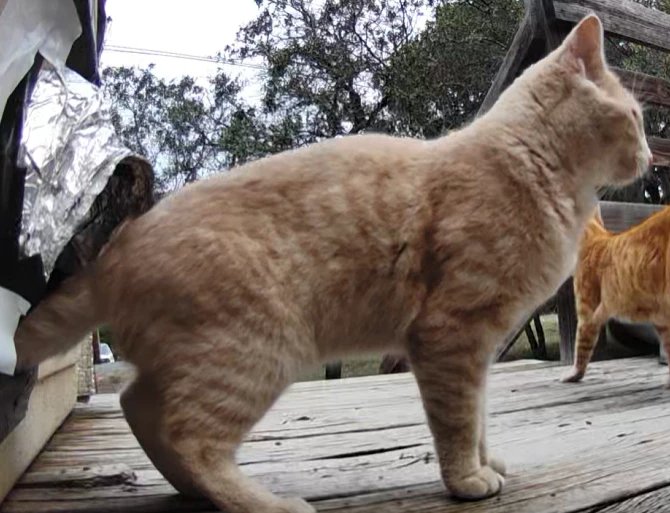
Peaches
Pale cream with faint stripes, much lighter than the orange cats. We'll find out boy or girl when the shelter does.
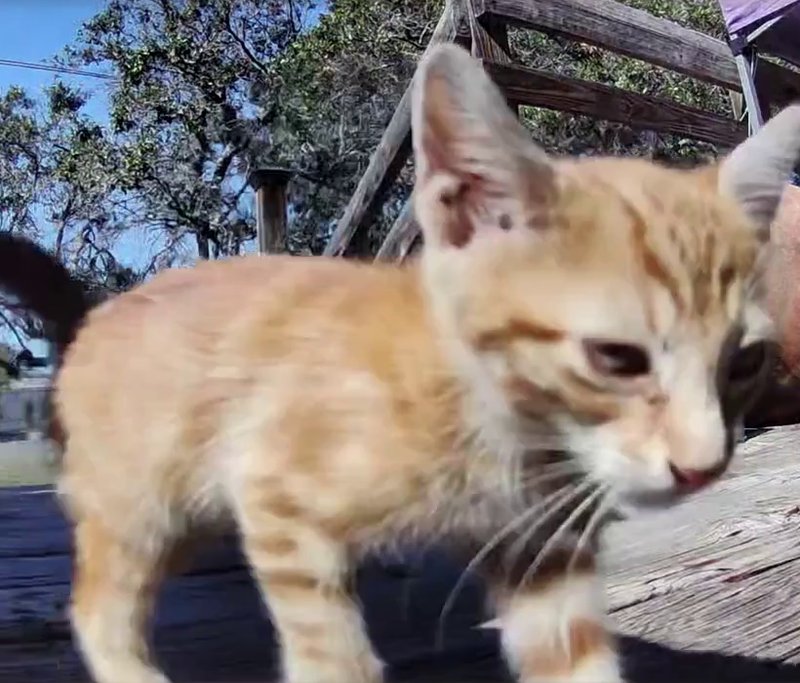
Kumquat
Clementine's kid. I say "he," but we won't know for sure until the shelter does. Kitten-sized in this photo and bigger every week.
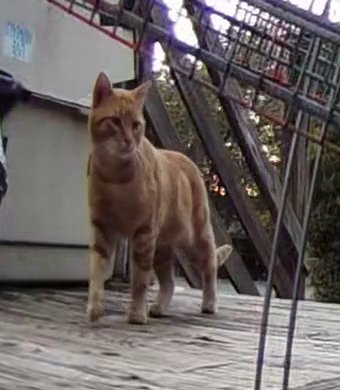
The Other Orange Tom
He looks a lot like One-Eyed Willie, minus the ear tip. He stared at the open trap for two full minutes and walked away.
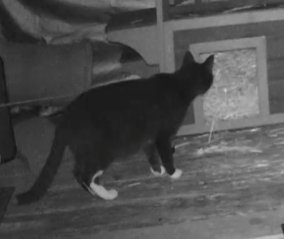
The Tuxedo
The newest face. Mostly black, with four white paws. He's been showing up every night, still deciding whether he trusts us.
Adopted
Three cats from the colony went to the shelter instead of back outside. All three found homes.
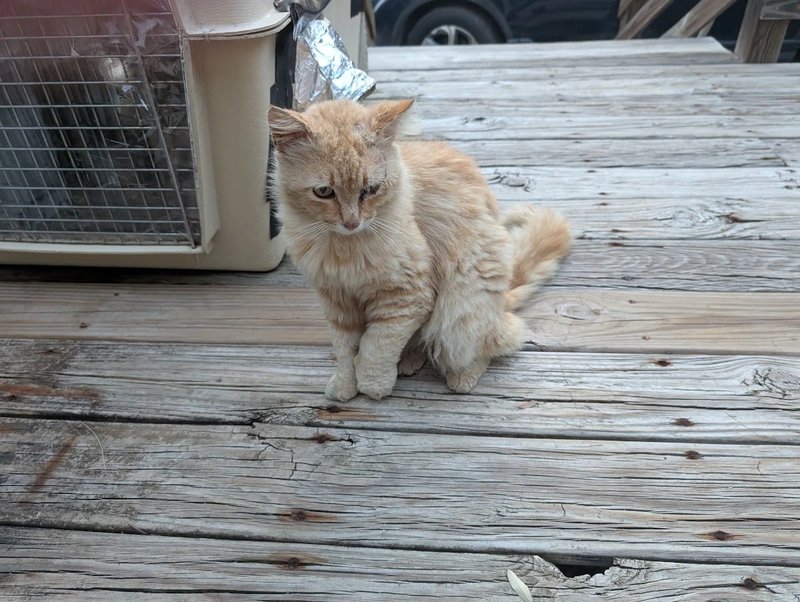
Garfield
A fluffy pale orange longhair who needed medical care for his foot. He got it, and then he got a family.
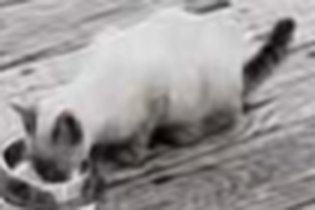
The Siamese Kitten
Young and pretty enough that the shelter asked to keep him for adoption. He's an indoor cat now.
The Little Sick Kitten
No photo of this one. We brought a sick kitten to the shelter, they nursed it back to health, and it was adopted too.
This isn't the whole colony, by the way. There are more cats out there than we've properly met, and we'll add them as we get to know them.
Our Trapping Gear
We use Tomahawk traps. Most of our catches happen under a drop trap with a squeeze panel. It sits propped up on the deck with food under it until the cats stop caring that it's there, and then we drop it with a remote. From there the cat moves into a 306NC transfer cage for the ride to the shelter and the recovery afterward. Our 306TX set-over cage is for the cats who let us get close: we lower it right over them while they eat, no trap needed. It doubles as a second transfer cage.
Watch the Colony
I film them constantly: breakfast rushes, night-camera visitors, trap days, and the occasional raccoon. The videos go up on YouTube, TikTok, Instagram, and Facebook.
Want to Help Cats Near You?
Check whether your county shelter or a local group runs a TNVR program. Many do it for free or close to it, and they often lend traps. If you're local to us, that's Williamson County's Feral Cat Surgeries program. If you want to learn how it's done, Neighborhood Cats has free guides and workshops. We took their TNR certification workshop in November, and it made a real difference.
— Leanne